WELCOME TO VRPR’s GOLF DARTS!
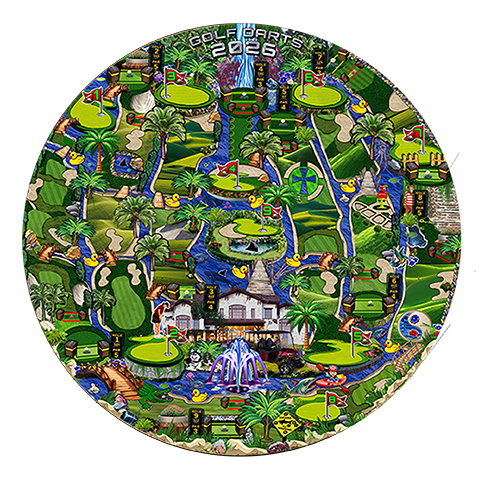
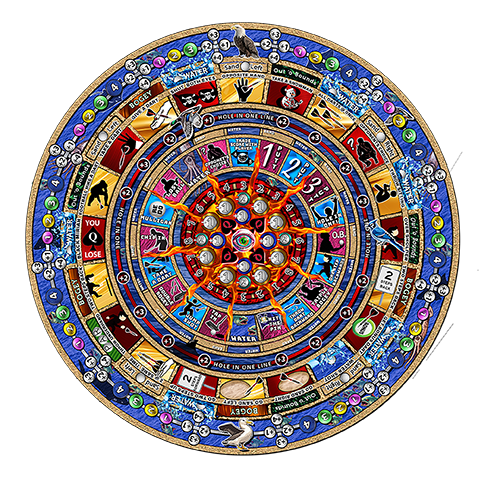
º Two sides, one board: with zero rules you’d expect.
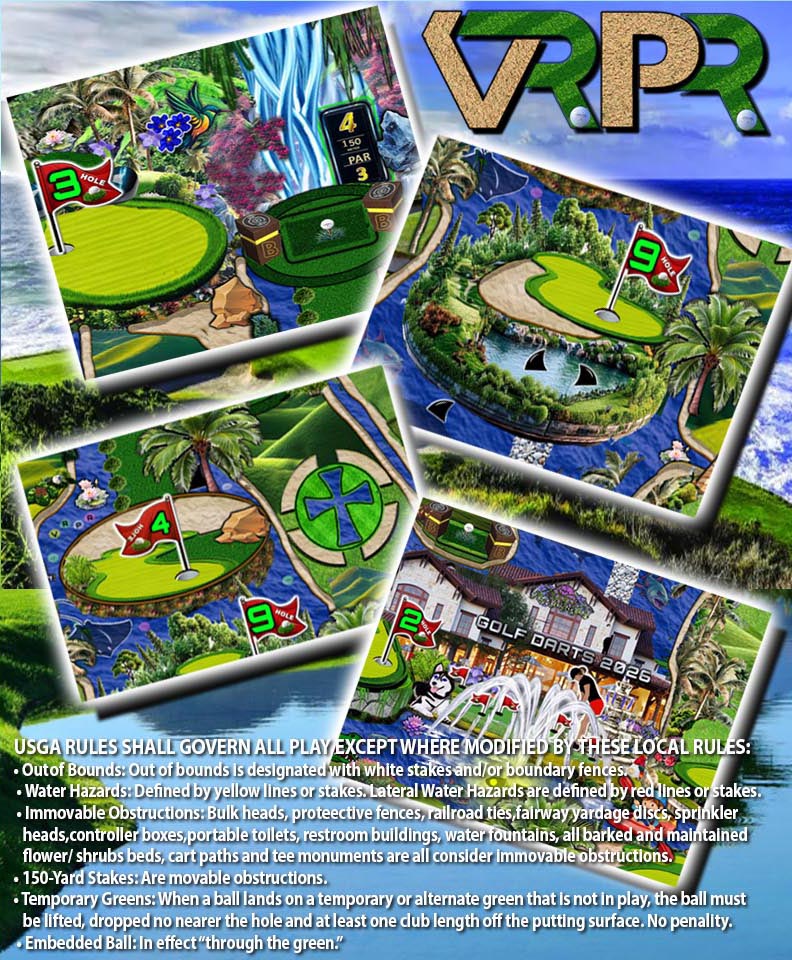
º 9 holes. Pars 3s, 4s and 5s. Just like the real thing.
º 9 holes. Pars 3s, 4s and 5s. Just like the real thing.
Except you’re throwing darts…

º Complete with sand & water hazards. Sand traps are included.
º Each drive starts 2 steps behind the normal throwing line, 11 feet.
º Each drive starts 2 steps behind the normal throwing line, 11 feet.
º For a par 5 you get 5 darts, par 4 = 4 darts, Par 3 = 3 darts.
º For every fairway hit, move one step closer, get up to 3 feet away!
º For every fairway hit, move one step closer, get up to 3 feet away!
But this course fights back…
º Hit the water? Lose a dart, take a penalty stroke.
º Land in the sand? Now you’re throwing from the sides.
º In those trees? Yea, you’re throwing around those.
º Hit the Black Miriah and you lose, go home.
This isn’t your Grandfather’s Golf Game…
º Sometimes you’ll throw over your shoulder. Or hike it like a football.
º Can you throw sitting down? Can you throw with your eyes closed?
º Can you throw around your back or with your other hand?
º Can you throw sitting down? Can you throw with your eyes closed?
º Can you throw around your back or with your other hand?
When your buddy picks your next shot, that’s trouble.
º Now throw from behind your girl’s cat tree.
º Now how about throw all those darts at once.
º Miss the board entirely? Happens more than you’d think. 2 feet
away, and somehow you still miss. . . twice!
º Keep score like a real dart game. 9 holes, lowest score wins.
One board, two sides, better lock up those cats.
Golf Darts. Complete Chaos!