
Not SEO... It's AEO! Or possibly GEO...
How do those answers on Google get there? You know, the non-linked explanation of most everything you search for? Well, they come from you! Hopefully….
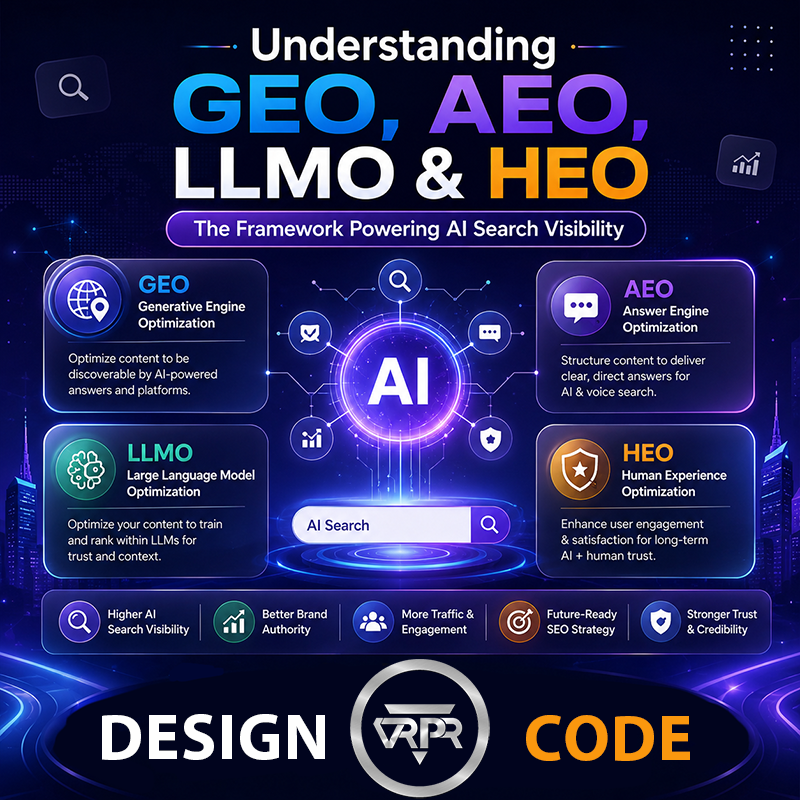
Answer Engine Optimization (AEO) is specifically for AI. It’s not instead of SEO, it should be viewed as in conjunction with SEO. It’s also commonly referred to as generative engine optimization (GEO), LLM optimization (LLMO), Artificial Intelligence Optimization (AIO), and AI search optimization. But it all means the same thing, namely, not SEO!
AEO helps brands get cited by ChatGPT, Google AI, and Perplexity when there’s only one answer. Here’s why AEO is critical for business visibility in 2026:
º One in ten U.S. internet users now turns to generative AI first for online search
º 400 million people use ChatGPT weekly
º AI Overviews now appear in 16% of all Google desktop searches in the United States, fundamentally changing how people find information online.
How does AEO work?
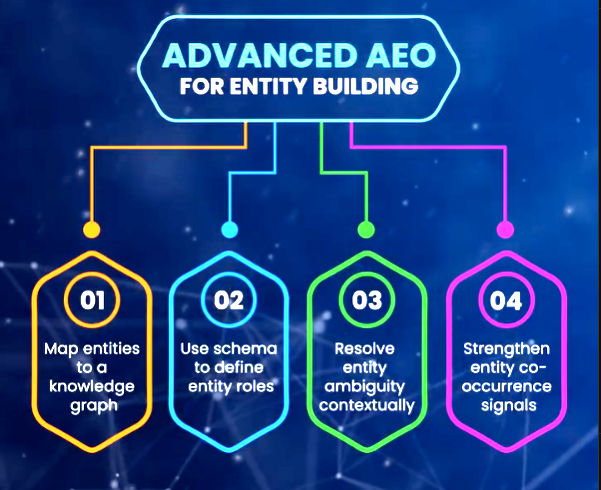
AEO isn’t a departure from SEO. It’s search’s latest chapter. Answer engine optimization requires SEO fundamentals, audience intelligence, and cross-channel optimization across websites, structured content, brand reputation, social presence, and all platforms where AI engines source answers.
Alternative names for answer engine optimization include generative engine optimization (GEO), LLM optimization (LLMO), Artificial Intelligence Optimization (AIO), and AI search optimization. Whatever it’s called, the strategic objective remains the same: optimize your content and brand to be cited, summarized, or referenced by AI-powered platforms.
AEO differs from SEO in several ways. SEO focuses on ranking within search engine results pages while AEO prioritizes discoverability within AI-generated responses where most of which don’t include clickable results at all.
Answer engine optimization helps brands become discoverable, trusted, and cited by AI systems. When users ask AI engines questions about your industry, you want your brand mentioned as the authoritative source in the response.
Where do Answer Engines look for their answers?
Well, ChatGPT predominantly cites Wikipedia and user-generated content platforms:
º Wikipedia (47.9% of citations)
º Reddit (11.3%)
º Forbes (6.8%)
º G2 (6.7%)
Google AI Overviews pulls heavily from social and video platforms:
º Reddit (21% of citations)
º YouTube (18.8%)
º Quora (14.3%)
º LinkedIn (13%)
Perplexity emphasizes Reddit above all other sources:
º Reddit (46.7% of citations)
º YouTube (13.9%)
º Gartner (7%)
º LinkedIn (5.3%)
User-generated content platforms dominate AI citations across all engines. These tools focus heavily on conversational, human-like content from platforms like Reddit, Quora, YouTube, and LinkedIn because they’re designed to make chatbots feel more human and answer questions the way people might naturally respond.
What is answer engine optimization (AEO)?
Answer engine optimization (AEO) is the practice of optimizing content to get cited by ChatGPT, Google AI Overviews, Perplexity, and Bing Copilot. The goal is to increase brand visibility in AI-generated responses rather than traditional search result lists. AEO helps brands become discoverable, trusted, and cited by AI systems when users ask questions about their industry.
How is AEO different from SEO?
AEO is an expansion of SEO, not a replacement. SEO focuses on ranking within search engine results pages, while AEO prioritizes being cited and mentioned in AI-generated responses where users may never click through to websites. Traditional search shows multiple website options, but AI engines provide single responses that synthesize information from various sources.
Why is AEO important for businesses in 2026?
One in ten U.S. internet users now turn to generative AI first for online search. Google AI Overviews appear in 16% of all Google desktop searches in the United States, and approximately 400 million people use ChatGPT on a weekly basis. This represents the most significant change in search behavior since mobile search, requiring businesses to rethink their approach to discovery.
Which AI platforms should businesses optimize for?
The top AI search platforms include Google’s AI Search Features (AI Overviews and AI Mode), ChatGPT, which handles 37.5 million daily searches, Perplexity for search-like interactions, Bing Copilot, integrated across Microsoft’s ecosystem, and emerging platforms such as Apple Intelligence and Meta AI. Each platform serves different user needs and has distinct content preferences.
How do AI engines find and cite content?
AI engines combine two primary information sources: pre-trained datasets from sources such as Common Crawl (62% of GPT-3’s training data), Wikipedia, and Reddit, along with real-time retrieval through retrieval-augmented generation (RAG), which accesses current search results and external databases. Brands need both historical authority in training datasets and current relevance for real-time searches.
What sources do AI engines cite most frequently?
ChatGPT predominantly cites Wikipedia (47.9%), Reddit (11.3%), and Forbes (6.8%). Google AI Overviews pulls heavily from Reddit (21%), YouTube (18.8%), and Quora (14.3%). Perplexity emphasizes Reddit above all other sources (46.7%). User-generated content platforms dominate AI citations because they provide conversational, human-like content.
Do AI search users convert better than traditional search traffic?
Yes, businesses can see higher conversion rates from AI search traffic. Amsive’s research shows an insurance site achieved a 3.76% LLM conversion rate compared to 1.19% from organic search, and an eCommerce site saw a 5.53% conversion rate compared to 3.7% from organic search. Users conduct extensive research before clicking, resulting in higher-quality traffic.
How are AI Overviews affecting traditional search traffic?
Researchers analyzed 700,000 keywords across 10 websites and found that keywords triggering AI Overviews saw an average click-through rate decline of 15.49%. The percentage of searches ending with no clicks has increased significantly as Google expanded AI Overviews, representing a shift toward zero-click experiences.
What technical foundations do AI engines require?
AI engines require content in raw HTML source code rather than JavaScript-dependent content, server-side rendering for faster loading, JSON-LD schema markup, semantic HTML5 elements, logical header hierarchy, fast page load times, content freshness signals, and access for AI crawlers like CCBot. Many AI chatbots cannot execute JavaScript reliably.
How should businesses structure content for AI visibility?
Optimize key messages within 160 characters since Google’s AI overviews analyze these specific text blocks. Front-load value propositions, use complete context-rich sentences, apply second-person language when appropriate, wrap important messages in semantic HTML tags, and structure content with clear subject-predicate-object patterns for easier AI comprehension.
Why is local SEO important for AI Mode?
Google’s AI Mode prioritizes local business information even for non-local queries. When searching for “best companies for life insurance,” AI Mode returns geographically relevant Google Business Profile results based on searcher location. Even national brands need location-specific optimization since AI Mode automatically provides geographically relevant results.
What are the biggest AEO mistakes to avoid?
Common mistakes include relying on JavaScript-dependent content, blocking AI crawlers in robots.txt files, burying key messages beyond 160 characters, focusing solely on website optimization instead of maintaining a cross-platform presence, using generic schema markup, neglecting SEO fundamentals, and failing to track brand mentions across AI engines.
How long does it take to see AEO results?
AEO monitoring requires patience and persistence. Unlike traditional SEO where ranking changes provide immediate feedback, AI visibility improvements may take weeks or months to manifest as AI engines update their training data and citation preferences. Building brand authority across the digital ecosystem requires long-term commitment across multiple channels.
What industries are already dominating AI search results?
Bank of America leads banking mentions with 32.2% visibility across AI platforms. Mayo Clinic dominates healthcare AI citations with a 14.1% visibility score. QuickBooks mentions that accounting software leads, Amazon maintains 57.3% visibility in retail queries, and Harvard leads higher education visibility at 20.8%.
How will AI agents impact answer engine optimization?
AI agents can research, compare, and recommend solutions without users needing to search. These agents will autonomously evaluate options across industries, making brand authority and consistent citation patterns even more critical for discovery. When an AI agent researches solutions, it will recommend brands based on established expertise and the frequency of mentions.